
Digital Zambia / 13 September 2026
What Zambia's connectivity progress means for organisations
Recent digital infrastructure developments in Zambia, and practical steps organisations can take to build services that work across real network conditions.
01
Connectivity is becoming business infrastructure
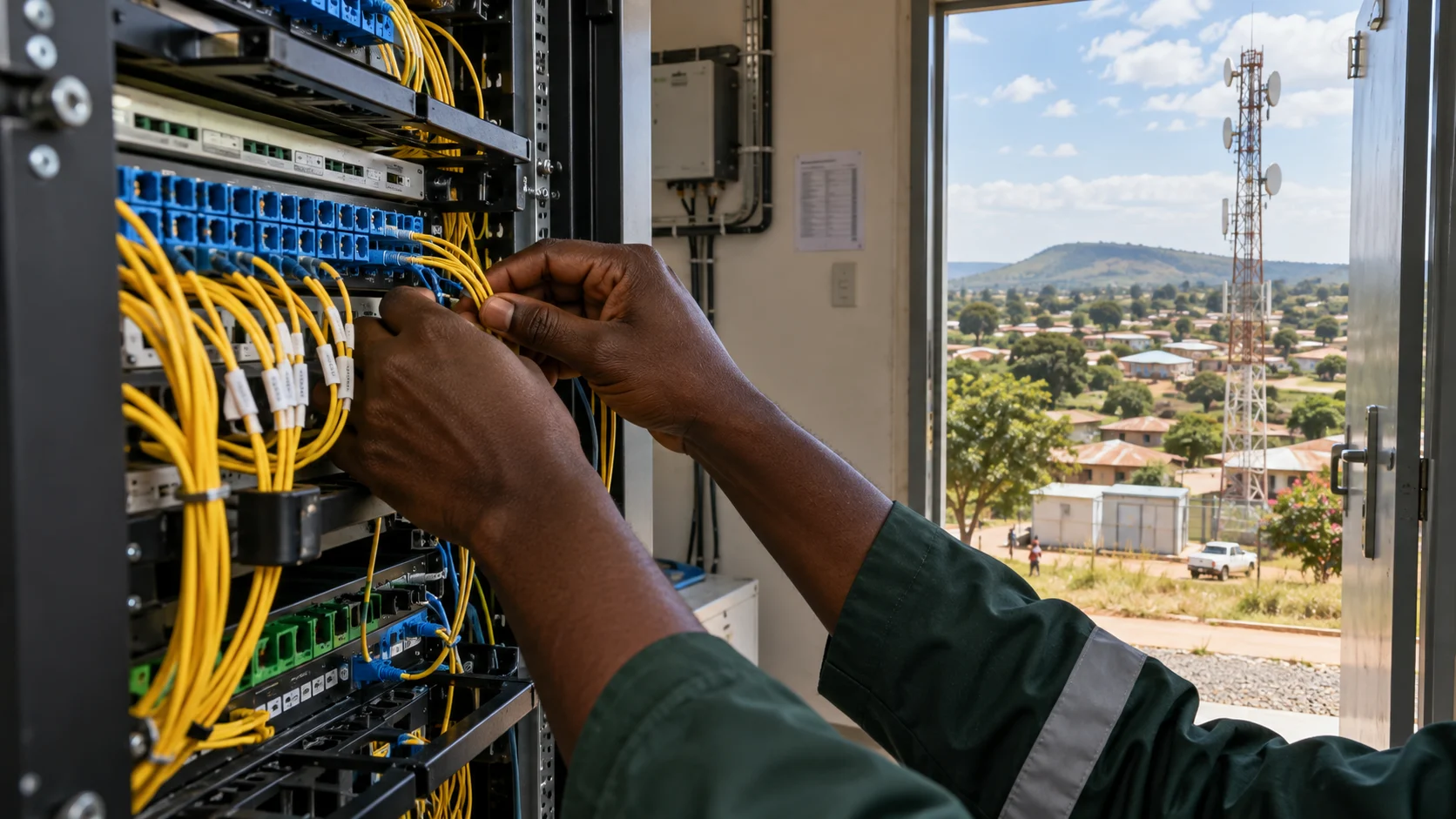
For a Zambian organisation, connectivity now shapes much more than email. It affects how customers find information, how teams share records, how branches coordinate, how payments move, and how services reach people outside a physical office. Zambia's National Digital Transformation Strategy reflects this wider role: its five pillars cover digital infrastructure, platforms, services, literacy and skills, and innovation and entrepreneurship.
The direction is encouraging, but an organisation should plan from the conditions its users actually experience. Coverage, cost, speed, reliability, device capability, and digital confidence vary by location and audience. A digital service designed only around a fast office connection in Lusaka can fail at the moment it reaches a customer on a lower-cost phone, a busy mobile network, or an intermittent connection elsewhere in the country.
02
Recent progress and the remaining gap
At the third Digital Economy Roundtable in May 2026, the Ministry of Technology and Science reported that fibre connectivity had grown from approximately 15,000 kilometres in 2021 to more than 45,000 kilometres. It also highlighted expansion of mobile towers and continuing work on quality of service. These are government-reported infrastructure developments, not a promise that every user now has the same quality of access.
The national strategy itself recognises gaps in rural and underserved areas, alongside the need for broader coverage, lower infrastructure costs, better service quality, affordable devices, and resilient power for digital infrastructure. ZICTA's statistics portal continues to publish market and survey information. Together, these sources point to an expanding digital market in which inclusion and reliability remain design requirements rather than finished work.
03
Design for the network people have
A resilient website or application should deliver its essential task before it loads decorative media. Keep pages light, compress images, limit large scripts, and make status messages clear. Forms should preserve entered information when a request fails. Users should be able to retry safely without creating duplicate submissions. Important instructions, contact details, and confirmation messages should remain understandable on a small screen.
For a web application, plan what happens when a session drops midway through a task. Save progress where appropriate, show whether data has been submitted, and avoid long operations that appear frozen. If field teams work in inconsistent coverage, consider an offline or delayed-sync workflow, but define conflict handling and device security before building it. A simpler reliable journey usually serves more people than a feature-heavy one.
04
Build operational resilience behind the interface
The service also depends on hosting, power, domain management, backups, monitoring, and people who know how to respond. Document the owners of each dependency. Use secure access with more than one authorised administrator, keep recoverable backups, monitor availability, and test restoration. Where a process is important, define a temporary manual route for periods when a provider or connection is unavailable.
Choose communication channels according to the task. A public website is useful for stable information and discovery. Email or messaging can support notifications. USSD or SMS may suit specific low-bandwidth interactions, subject to provider arrangements and privacy needs. A browser application can manage deeper workflows. These channels can complement one another when they share clear information and do not force users to repeat the same details.
05
Measure experience by place and task
National connectivity figures provide context, while an organisation's own service data shows where action is needed. Measure completion of the important journey, page performance on common mobile devices, failed submissions, support requests, and usage by region where that can be collected responsibly. Speak to staff and users outside the head office. Averages can hide a difficult experience for the exact community a service is meant to reach.
Zambia's infrastructure progress creates room for better digital services, but access becomes valuable only when people can complete useful tasks. Organisations that design for varied connections, protect essential operations, and learn from real usage will be better placed to grow with the country's digital ecosystem. Connectivity is the foundation; dependable service design turns it into practical access.
Sources
Official references
This ONBRD editorial article draws on the following primary sources. The practical recommendations are ONBRD's interpretation for organisational planning.